
What actually holds up when you furnish a shared home
Furniture, bedding, and storage that survive high turnover — measured against the bedroom and bed standards Texas licensing already requires.
We get a version of the same question from almost every new partner, usually a week or two after move-in: something in the house is already broken — who’s supposed to replace it?
It’s rarely a complaint. It’s a planning question, and it’s the right one. A master-leased home gets more wear than almost any other kind of rental, because the thing that makes it valuable — one roof, multiple residents, a program running inside it — is also the thing that shortens the life of everything in it. Furniture built for a single-family household doesn’t survive a houseful of people rotating through on a program’s timeline. The operators who plan for that from day one spend less, replace less often, and pass inspections without scrambling.
This isn’t a shopping list. It’s what we’ve learned about the gap between “furnished” and “furnished to actually hold up,” and where Texas licensing minimums already draw a harder line than most people expect.
Furnished is not a finish line
When a home arrives furnished under a master lease, that word is doing less work than it sounds like. Furnished means there’s a bed, a dresser, a couch, a table. It doesn’t mean any of it was chosen for the household that’s about to live there, and it doesn’t mean it’s rated for the turnover a program creates.
A couch in a single-family home gets used by the same two or three people for years. A couch in a home serving six residents on staggered terms gets used by a rotating cast, often without the shared history that makes people careful with things that aren’t fully theirs. The furniture that survives that is not the furniture that survives a normal household — it’s closer to what a busy short-term rental or a dorm buys, and most operators don’t find that out until the first replacement bill.

The fix isn’t more furniture. It’s furniture rated for commercial or institutional use wherever a resident will actually sit, sleep, or lean — solid wood or steel frames over particleboard, stain-resistant and wipeable upholstery over fabric that shows everything, mattresses built for repeated use rather than a single buyer. It costs more up front. It costs less over a multi-year lease, which is the term that actually matters here.
What Texas licensing already requires — and why it’s a floor, not a ceiling
Not every program we lease to is licensed the same way. A general residential operation serving youth in state care answers to one set of rules; a sober-living home follows NARR and TROHN certification standards instead of state licensing; an HCS or TxHmL provider answers to its own waiver program requirements; veteran and senior housing each carry their own. We’re not the operator and we don’t hold any of those licenses ourselves — that’s the partner’s responsibility, and it’s worth confirming directly with whichever body certifies your specific program, since the rules genuinely differ by population.
But one of those frameworks is unusually specific about furnishings, and it’s worth walking through because it shows what a real regulator actually checks — not a vague “keep it clean” standard, but line items.
Texas’s rules for general residential operations (26 TAC Chapter 748, which the state’s own rule text says covers “adult residents” of the operation as well as children) require that living space and furnishings be “safe, clean, and maintained in good repair,” and that each resident get personal storage space in their bedroom for clothing and belongings. There’s also a minimum of 40 square feet of indoor activity space per person, not counting bedrooms, halls, kitchens, or bathrooms — a reminder that furnishing a home for turnover means furnishing the common areas with the same seriousness as the bedrooms, not just the rooms a resident sees first.
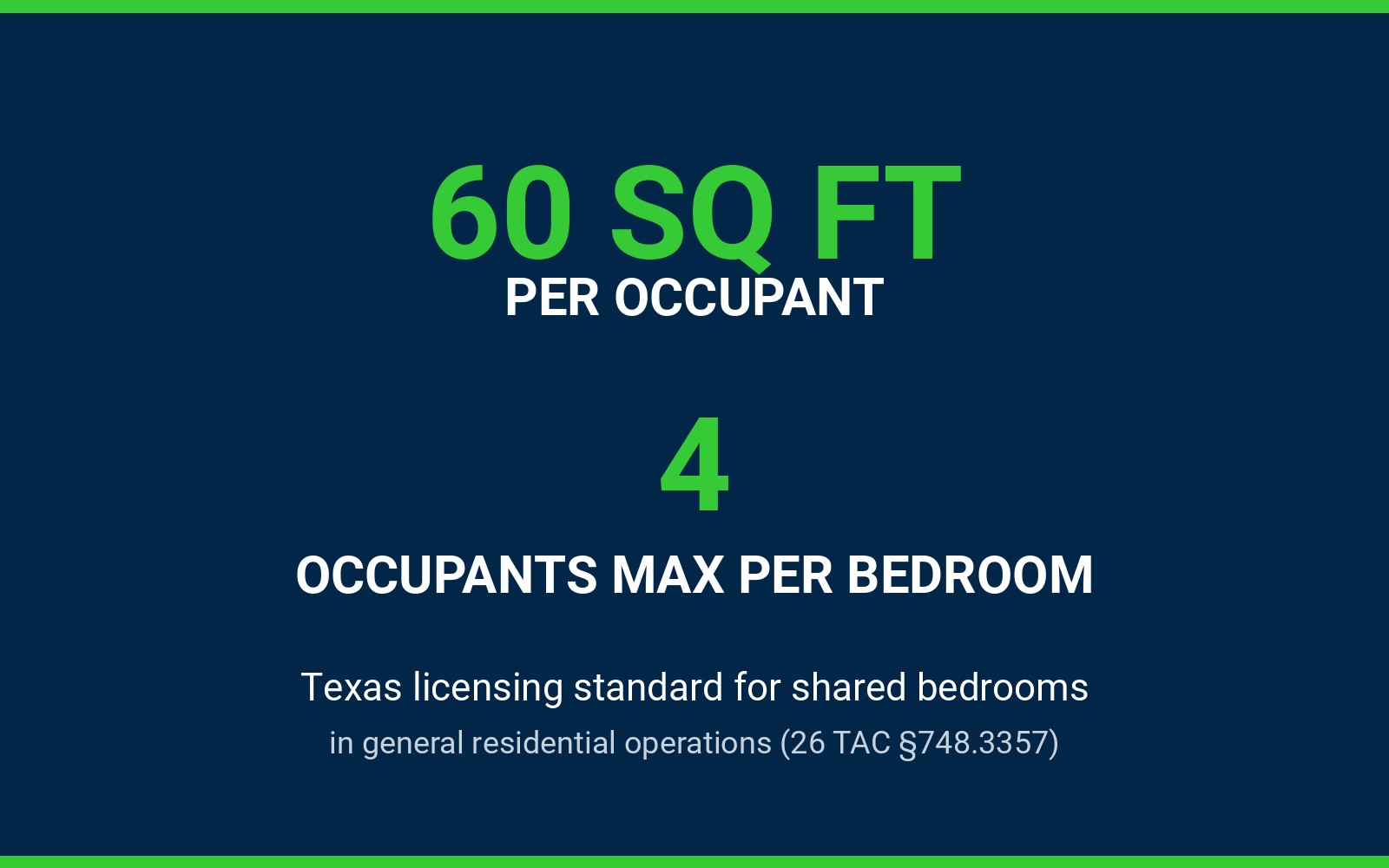
The bedroom rules are the part that surprises people who assume every resident gets a private room by default. The standard allows a single-occupancy bedroom with at least 80 square feet of floor space, or a shared bedroom with at least 60 square feet per occupant — but caps shared bedrooms at four occupants, period, even if the room is physically large enough for more. Floor space can’t include closets, and it can’t be averaged across people in the room. It’s a workable standard, but it’s built around the assumption that most bedrooms in a program setting will be shared, which lines up with what we tell every partner before they sign: don’t plan around a private bedroom for each resident. Plan around the square footage, and let the licensing math tell you how many beds actually fit.
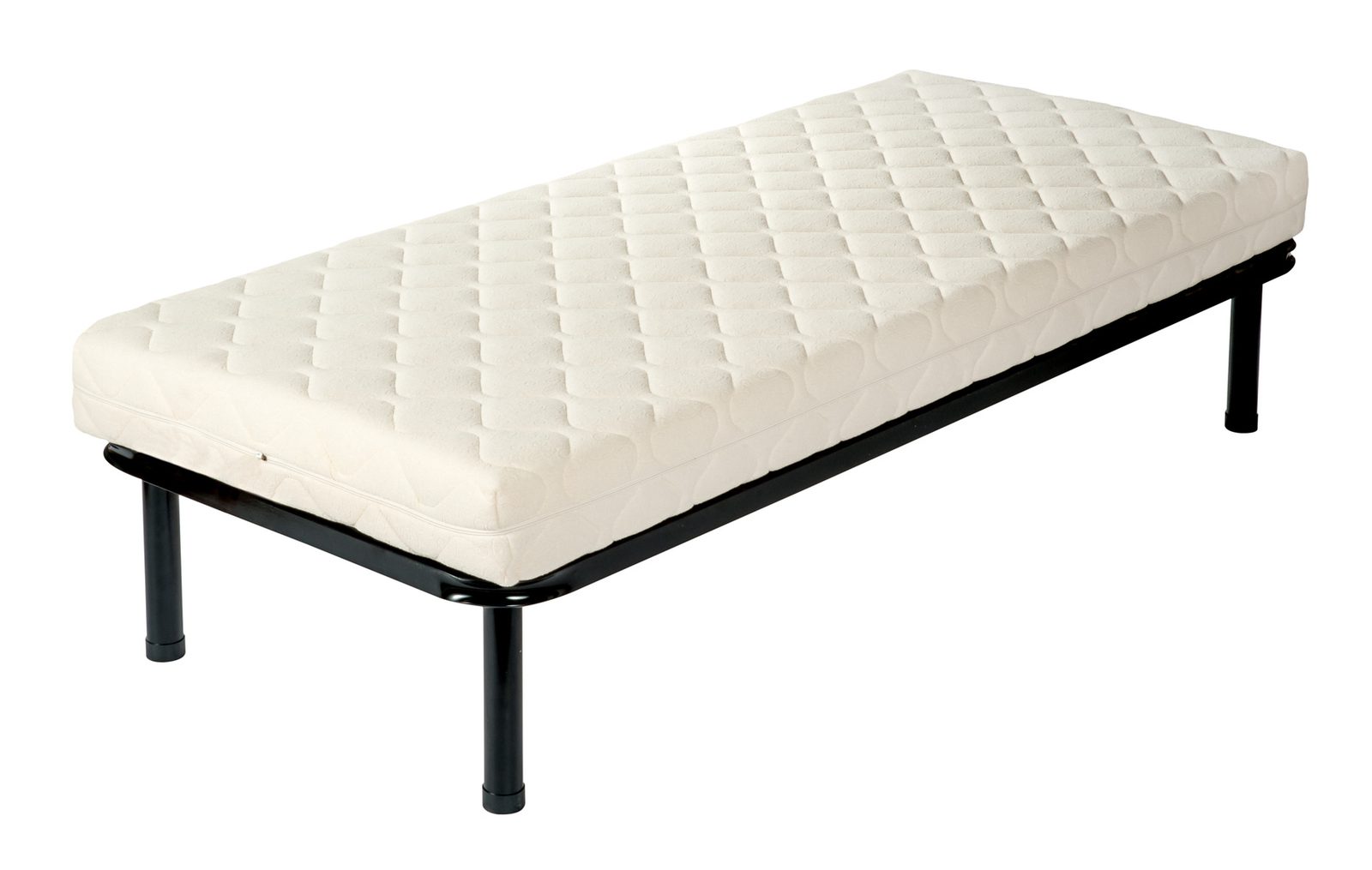
Beds themselves have their own line item: each resident gets an individual bed or bunk bed that elevates the mattress off the floor, with a clean and comfortable mattress that’s either waterproof or protected by a cover, plus a pillow and appropriate linens — changed between residents and laundered at least weekly even when the same person keeps using them. None of that is exotic. It’s the baseline a licensed program is already expected to hit, and it’s a reasonable baseline even for the programs that answer to a different certifying body instead.
We’re not suggesting every reader is bound by Chapter 748 specifically — check with your own licensing or certifying body, because the exact numbers vary by program type. What’s worth taking from it either way is the pattern: real standards measure square footage per person, occupancy caps per bedroom, and condition of individual items, not a general impression of “nice enough.” Furnish to that level of specificity and you’ll clear almost any inspection with room to spare.
The furniture that actually survives a program’s timeline
A few categories matter more than the rest, because they take the most abuse and cost the most to replace on a bad schedule.
Mattresses and bed frames come first. A mattress that degrades after eighteen months of rotating use is a recurring cost disguised as a one-time purchase. Look for mattresses rated for multi-use or hospitality settings, and frames that don’t rely on particleboard joints that loosen with repeated moving and cleaning between residents.
Seating in common areas is second. Whatever furniture a household gathers around — a living room sofa, dining chairs — gets the most hours of use and the least individual ownership. Stain-resistant, cleanable upholstery and frames rated for repeated weight aren’t optional extras here; they’re the difference between replacing a couch once every few years instead of once a year.
Storage is third, and it’s the category operators underestimate most. The licensing minimum is personal storage space per resident, but the real-world need is storage that survives a resident moving out and a new one moving in within days — drawers and closet hardware that don’t fail from the kind of repeated, unceremonious use a program schedule creates, rather than the occasional use a single-family household gives the same furniture.
Kitchen and dining items round it out. These see the most hands per week of anything in the house, and the cheapest versions of each are usually the first thing to fail — not because they were used wrong, but because they were never built for a six-person household cycling through two or three times a year.
Building the cost into the lease, not around it
The reason this matters for a master lease specifically, rather than any rental, is timing. A traditional landlord replaces furniture between tenants, on their own schedule, when the unit sits empty for a week or two. A program home doesn’t get that gap — the point of a master lease is continuity, which means furniture gets replaced while the house stays occupied and running, on whatever timeline the wear actually demands.
That’s a planning problem, not a crisis, if it’s built into the budget from the start rather than discovered the first time a couch gives out. The operators who do this well treat furnishing cost the same way they treat the budget line we’ve written about before — a predictable, recurring item tied to the lease term, not a surprise expense that competes with program funding. A grant reviewer evaluating a budget wants to see that furniture replacement was planned for, the same way they want to see rent and staffing planned for. “We didn’t expect the couch to wear out” doesn’t read as a planning gap a funder wants to see twice.
What to ask before you sign
A few questions, asked before move-in rather than after the first thing breaks, cover most of what matters: What condition is the current furniture in, room by room, and is there a written inventory? Who is responsible for replacement during the lease term — the partner, as day-to-day upkeep generally is, or does the lease specify otherwise? What’s the bedroom occupancy plan, measured in square feet against your own licensing or certification standard, not against how many rooms the house happens to have? And is there a maintenance and replacement budget line already built into your program’s annual plan, separate from rent?
None of these questions have a single right answer. They have an answer specific to your program, your population, and your licensing framework — which is exactly why they’re worth asking out loud, in writing, before the lease starts rather than after the first resident notices the couch.
A house that looks great freshly furnished and a house that’s still in good shape two years into a program’s timeline are frequently not the same house. Planning for the gap between those two is what this is really about.
Furnishing a shared home for turnover isn’t a side detail of a master lease — it’s one of the few parts of the arrangement an operator can plan for completely in advance, with real numbers instead of guesswork. The licensing minimums exist because someone already worked out what a shared, high-turnover household actually needs. Starting there, instead of starting from what looks nice in a showroom, is the difference between a house that’s still in good shape at renewal and one that needed quiet, expensive fixes the whole way through.
See how we think about the populations we work with and what each one needs from a physical space.
This article is for general information and education, not legal, financial, or regulatory advice. Furnishing, licensing, and certification requirements vary by program type and population and can change. Confirm current requirements directly with your program’s licensing or certifying body and your own legal or professional advisors before making decisions based on anything here.
Furnishing a home for your program?
Tell us what you’re working with and what your caseload needs. We’ll walk through it with you.
Start the Conversation