
HCS or TxHmL: the waiver that decides your housing plan
HCS and TxHmL sound like two versions of the same benefit. Only one of them funds a move into a home, and the difference is easy to miss on a fast referral.
A family calls a Local Intellectual and Developmental Disability Authority in Texas today and can expect to wait fifteen to eighteen years before a Medicaid waiver slot opens. That is not a worst case. It is closer to typical. For an organization already running HCS-funded homes, the wait itself is not the operational problem — it already happened, quietly, to the person now standing in front of you with a released slot and nowhere immediate to live. The question that follows is smaller than the wait, but easy to get wrong: HCS and TxHmL are not two versions of the same waiver, and only one of them is a housing conversation at all.

What the wait actually looks like right now
More than 198,000 Texans currently sit on one of the state’s six Medicaid interest lists for intellectual and developmental disability services, according to testimony given to the House Committee on Human Services this spring. The HCS list alone carries roughly 133,000 names. Advocates told lawmakers that a family entering the list today can expect fifteen to eighteen years before an offer — and cited a specific case of someone eight years in, ranked 83,884th. During the most recent two-year state budget cycle, roughly 2,500 people were enrolled into services. Nearly 15,000 more were denied, declined, or could not be located when their number finally came up.
That last figure is worth sitting with. A slot opening after fifteen years does not guarantee it gets used — a family’s circumstances change, a phone number goes stale, a person’s address is no longer current when Health and Human Services finally reaches out. Every one of those lost placements is a slot that took fifteen years to create and evaporated anyway. For an organization holding an HCS provider contract, the lesson is blunt: when a slot releases and a resident is finally ready to move, the home needs to already exist. There is no version of this system where “we’ll find a house once the slot clears” is a fast plan.
The list itself works on strict seniority. A person’s Local IDD Authority enters them on the Community Services Interest List using their request date, and that date — not their current need, not a crisis at home — determines when an offer goes out. LIDDAs are required to check back in with every family at least every two years to confirm they still want the slot, which is its own quiet operational detail: a family that moves, changes a phone number, or simply misses that biennial contact can lose a place it took over a decade to reach.
HCS and TxHmL are not the same conversation
The two waivers get used almost interchangeably in casual conversation, and that habit causes real confusion when a referral comes in. Texas Home Living, or TxHmL, is built for someone who continues living with family or in their own home in the community — the waiver supplements that living situation with day habilitation, respite, supported employment, and clinical services. It was never designed to fund a move into a residential program, and by its own eligibility rules, it does not.
Home and Community-based Services, or HCS, is the waiver that does. HCS covers the same kind of day and clinical supports as TxHmL, plus residential assistance: host home and companion care arrangements, small group homes capped at four beds, and supported or supervised independent living. Eligibility for either waiver runs through an ICF/IID level-of-care determination, an intellectual disability diagnosis or a qualifying related condition such as autism, cerebral palsy, or a seizure disorder with onset before age twenty-two, and Texas Medicaid’s financial limits.
The practical takeaway for anyone fielding referrals: if a Local IDD Authority, family member, or case manager mentions TxHmL and a housing move in the same sentence, something does not line up. It is worth one clarifying call before either side spends time on a placement the waiver was never built to fund.
Where a master-leased home actually fits
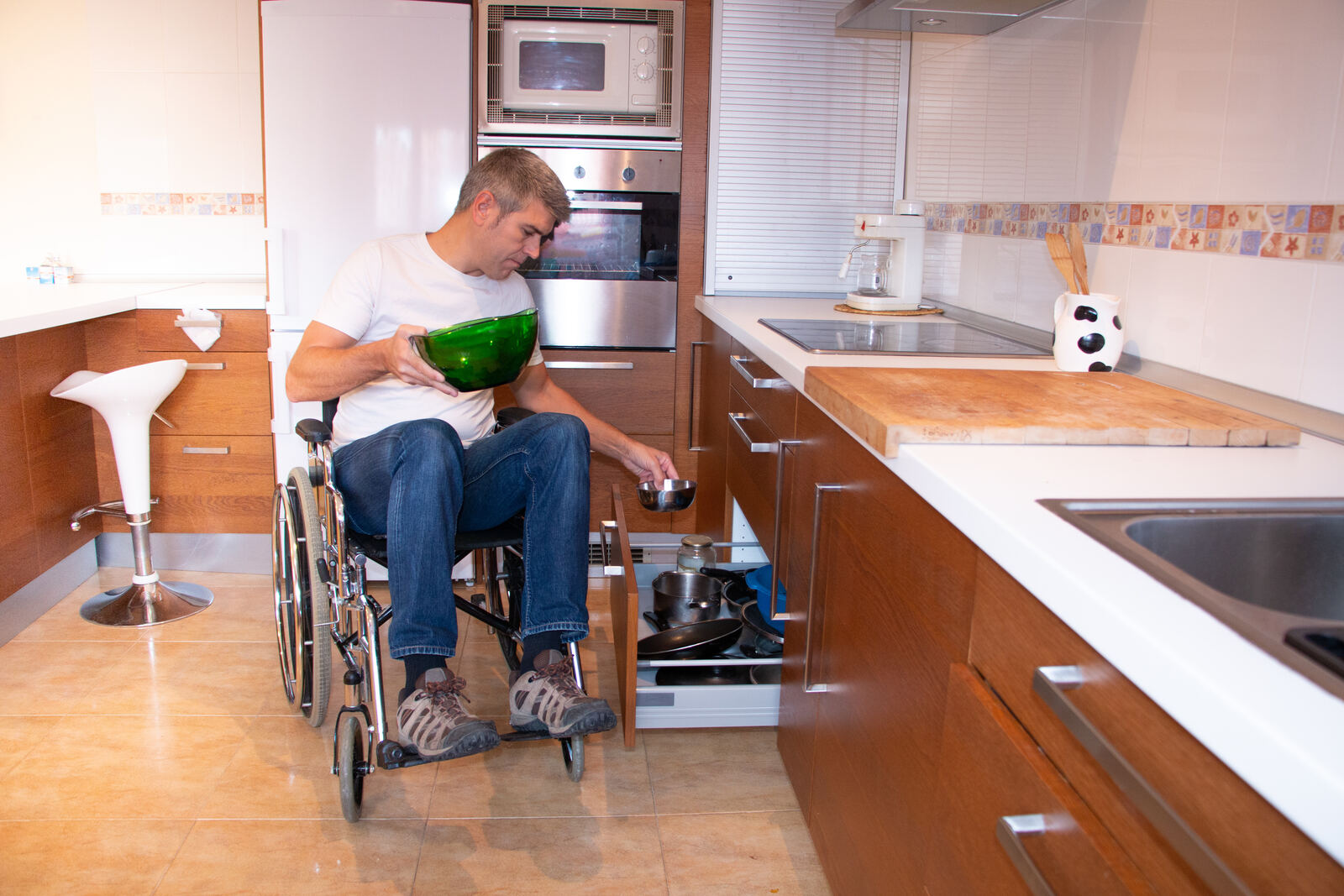
We are not a program provider, and we do not hold anyone’s HCS contract. What we do is remove one variable from an equation that already has too many: finding, furnishing, and holding a home that is ready the day a released slot needs one. The organization applying for or already holding the HCS provider agreement stays the license holder and runs the program according to its own procedures — intake, staffing, plans of care, and everything HHSC requires of a residential provider. We hold the lease, keep the home furnished and ready, and stay out of the parts of the work that were never ours to do.
That division matters most for organizations already operating one or more HCS group homes and trying to add capacity. The waiver’s own math — roughly 2,500 people enrolled against a six-figure interest list — means every additional licensed bed an organization can bring online is a bed that would otherwise sit empty on a released slot with nowhere to place the person. A multi-year lease lets a licensed IDD provider commit to expansion staffing before a single resident moves in, instead of hiring against a lease that could end before the program stabilizes.
It also turns housing into a single predictable line in a budget that is otherwise built around grant cycles and per-diem reimbursement rates. A provider expanding into a second or third HCS home is not just solving a real-estate problem — it is trying to plan staffing, transportation, and supervision ratios around a home it can count on for years, not months. That planning gets considerably harder when the lease underneath it could end before the next state budget cycle does.
What the physical home actually needs to hold up
HCS group homes are capped at four beds, which makes the home itself — not just the program around it — part of the licensing conversation. A few things matter more here than in general-purpose housing:
An entrance without steps, or a usable ground-floor alternative. Mobility needs vary widely across this population, and a home that only works for residents who can manage stairs has a shorter useful life than one that does not require that assumption.
Wide doorways and clear hallway paths. A walker, a wheelchair, or a resident who simply needs more room to move safely should not have to negotiate a home built around narrow, compartmentalized rooms.
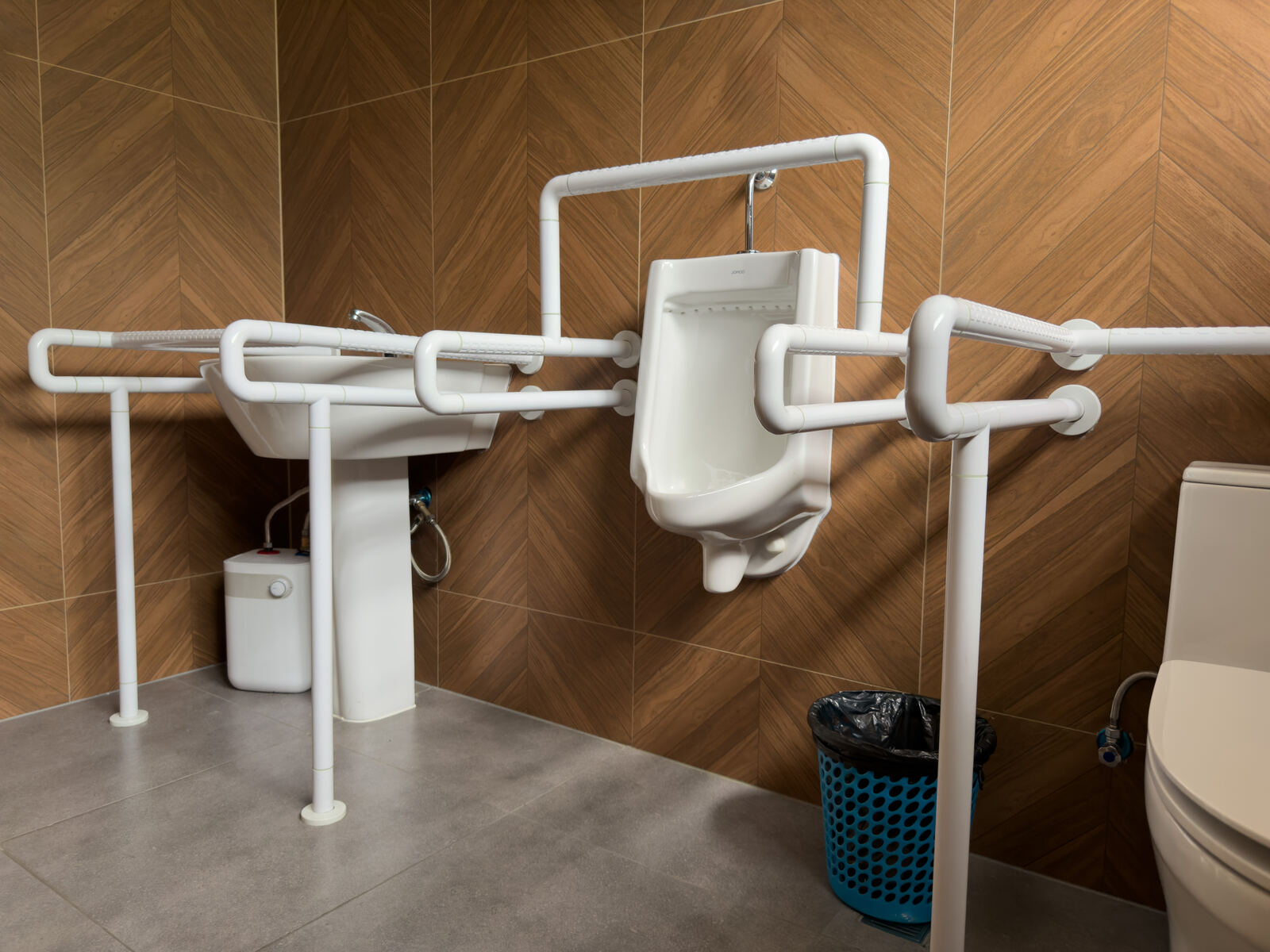
A bathroom that can take grab bars and a transfer-friendly layout. Retrofitting after move-in costs more — in money and disruption — than choosing a home that already has the clearances a bathroom like this requires.
A kitchen and common area with clear sightlines. Staffing ratios under a residential support license depend on being able to see and supervise without hovering. The home should still look and feel like a home, not a facility — that distinction is part of what the community-based settings standard behind these waivers is trying to protect in the first place.
Proximity to day habilitation sites and transit. Many residents attend day programs on a fixed schedule, and a home an hour from the nearest one turns a transportation plan into a daily liability.
Five questions worth asking before you sign
Can the lease sit in the organization’s name, not an individual resident’s? HCS residential support relies on organizational tenancy, not a lease a resident signs personally.
Is the home within the four-bed licensing cap — or built to hold more than your license allows? A larger house sitting partly empty above your capacity is not a growth advantage. It is overhead.
What is the term, and does it outlast your provider contract’s renewal cycle? A lease that expires mid renewal creates exactly the kind of relocation your residents can least afford.
Who handles day-to-day upkeep, and is it written down? Get this in writing before move-in, not after the first work order.
Does the partner understand that HHSC licensure, staffing, and plans of care are entirely yours? A partner who thinks they are co-running the program is a partner who will eventually get in the way of it.

What this is not
Worth being precise here, because the terms blur easily. An Intermediate Care Facility for Individuals with Intellectual Disabilities, or ICF/IID, is a licensed institutional setting with its own staffing and regulatory structure — a different model, built for a different level of need. A master-leased home is not that, and we do not make level-of-care determinations, run day habilitation, or decide who is ready for community-based residential services. Those decisions belong to the LIDDA, the provider’s clinical team, and the interdisciplinary team that builds each resident’s plan of care.
What we provide is the home a licensed HCS provider needs once those decisions are already made: furnished, accessible, held on a lease long enough to plan around, and ready before the family finishes waiting rather than after. That is a narrower job than the one a program runs, and it is worth keeping it that way — for residents, for licensure, and for the trust HHSC places in the organization actually holding the contract.

The wait is real. The housing does not have to be.
Texas’s HCS and TxHmL interest lists are not shrinking on their own, and the organizations already licensed to serve this population are, in a real sense, the fastest path off of them — every bed added is a family that does not spend another year waiting. Housing should not be the reason that bed does not exist.
Running HCS group homes and thinking about your next bed?
Tell us your service area and the bed count you are trying to reach. We will tell you plainly whether a master-leased home solves the problem you actually have.
Start the Conversation