
Texas’s senior housing gap, in the numbers that matter
The population curve, the affordability math, and the multi-year wait list — and where organizations serving seniors can actually move faster.
Texas is getting older faster than almost anyone planned for. In 2020, about 13.5% of Texans were 65 or older. By 2060, that share is projected to reach 21.7% — and 134 Texas counties, mostly rural ones, already record more deaths than births each year. The population that needs senior housing is not a future problem. It is arriving on a schedule, county by county, right now.
None of that shows up as a dramatic headline. It shows up as a waiting list that gets a little longer every year, a home health referral that has nowhere stable to send someone, or a case manager who has done everything right and still cannot find a landlord willing to work with an 82-year-old on a fixed income.
This is written for the directors and case managers at Area Agencies on Aging, PACE programs, and other organizations serving older Texans, who are watching that demand curve rise against a housing supply that was not built to match it. The numbers below are the ones we think matter most when deciding where to put effort this year.
The affordability math, nationally
Start with the plainest number: more than a third of older households nationally — 34%, or 12.4 million households — were cost burdened by housing in 2023, spending over 30% of income on it. More than half of those, 6.7 million households, were severely burdened, spending over half their income just to keep a roof overhead. That total climbed from 10.2 million households in 2019 to 12.4 million in 2023 — 2.3 million more cost-burdened older households in four years.
Renters fare worse than owners: 58% of older renter households are cost burdened, compared with 28% of owners. For someone on a fixed income, renting is already the harder path — and it is the path most of the people your organization serves are on.
The burden is not distributed evenly. Black older adults are cost burdened at 45%, Hispanic older adults at 43%, compared with 32% of white older adults. Adults 80 and older are cost burdened at nearly 40%, versus about 32% for those 65 to 79 — the need gets sharper, not easier, the longer someone lives.
What federal housing programs can and cannot cover
HUD’s Section 202 program is the main federal tool built specifically for this population: capital grants to nonprofits to build or acquire housing for adults 62 and older with very low incomes, paired with rental assistance so residents pay roughly 30% of their income toward rent. It is a real program with real reach. It is also not close to meeting the need.
More than 2.35 million very low-income older renters nationally face a housing cost burden or substandard housing, and Section 202 waiting lists commonly run two to five years or longer. Only about 36.5% of income-qualifying older adults who need federal rental assistance actually receive it. "Worst-case housing needs" among seniors — the combination of severe cost burden, substandard housing, or both, with no housing assistance — rose 69% between 2009 and 2019.
None of that is a criticism of Section 202. It is a capacity problem: the program was never sized for the population growth Texas is now living through, and a two-to-five-year wait does not help someone who needs housing this year.

Area Agencies on Aging, PACE sites, and long-term-care ombudsman programs already do the work of finding people before a crisis — a fall, an eviction, a caregiver who can no longer manage alone. What most of them do not have in-house is a housing arm that can move as fast as their case management already does. That mismatch, more than any single funding gap, is where people fall through.
The rural stretch makes this harder, not easier
The aging trend is not landing evenly across the state. Rural Texas counties are aging fastest, and 134 of them already record more deaths than births in a given year — a marker demographers use to flag a county whose population is aging in place rather than being refreshed by younger arrivals. That matters for anyone planning housing capacity, because rural counties are exactly where the two usual solutions — new construction and private-market rentals — are weakest. There is less capital interest in building there, and a thinner rental market means fewer landlords, not more, when a program goes looking for a unit.
A master-lease model does not solve rural scarcity by itself — it still depends on there being a house to lease. But it scales into a small market in a way ground-up construction cannot: one existing home, furnished and ready, rather than a project that needs financing, permitting, and a multi-year timeline before the first resident moves in. For an Area Agency on Aging covering several rural counties from one regional office, that difference in speed is often the difference between adding capacity this year and adding it in three.
Where the gap actually gets filled
Between a multi-year federal waiting list and a market-rate apartment a fixed income cannot sustain, there is a narrower lane: co-living and shared housing arranged by an organization that already has the referral relationships, the case management, and the trust of the people it serves. It is faster to stand up than new construction, because the unit already exists. It does not require a resident to individually qualify for and sign a private lease, because the organization holds that relationship instead. And it can flex in scale — three bedrooms this year, eight next year — in a way a capital-funded building cannot.
That is the role a master-leased home plays here. We are not the case managers and we do not run the program — that work belongs to the organization serving the resident. What we can do is remove the piece that otherwise takes months: finding a landlord willing to work with an organization instead of an individual tenant, furnishing the home, and having it ready closer to weeks than years.
What to look for in a home built for this population
A few things matter more here than in general-purpose transitional housing:
Single-story, or a bedroom on the ground floor. Mobility changes over time, and a home that requires stairs to reach the only usable bedroom has a shorter useful life for this population than the same home in a different program.
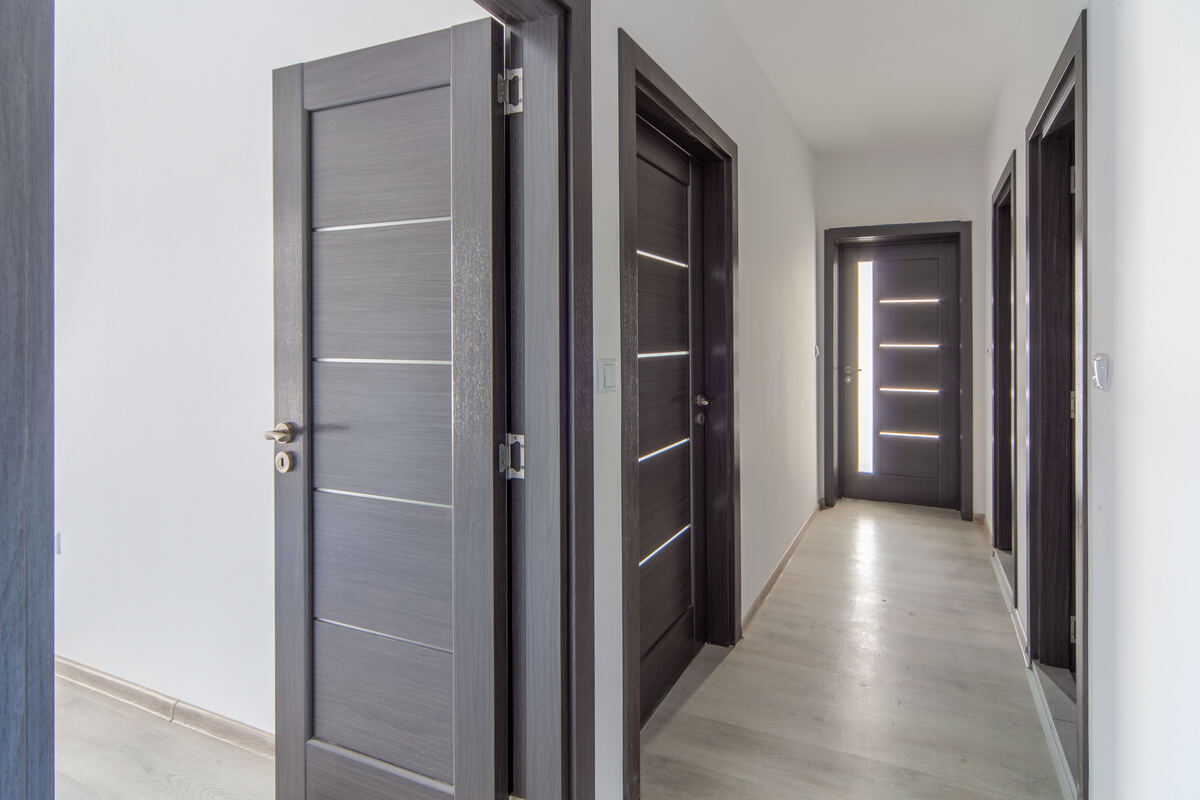
Wide, clear hallways and doorways. Not a renovation project — existing homes with an open layout accommodate a walker or a wheelchair far more easily than a home built with narrow, compartmentalized rooms.
Proximity to what daily life actually requires. A pharmacy, a grocery store, and a bus line within reach matter more for an 80-year-old resident than for almost any other population a master-leased home might serve.
A no-step or minimal-step entry. The single most common fall risk in a home is the transition at the front door, and it is also one of the cheapest things to get right before a resident ever moves in — a detail that gets missed when a home is chosen for price or availability first.
A furnished home, from day one. Moving is disruptive at any age. For an older adult moving out of a housing situation that was already unstable, arriving to an empty unit and having to furnish it before it is livable adds a delay — and a cost — the person moving in usually cannot absorb.
What this is not
Worth being precise here, because the terms get blurred. A licensed assisted living facility provides personal care and supervision under state licensure — help with medication, bathing, mobility, and staff on-site to provide it. A master-leased home is housing, furnished and ready, with no clinical care attached. The organization holding the master lease and running the program decides what services wrap around that housing and whether a resident’s needs fit a housing-only model or require a licensed care setting instead.
That distinction matters for the people making placement decisions as much as it matters for compliance. Housing that is stable, accessible, and near what daily life requires solves a real problem for an older adult who is independent but priced out of the market. It does not solve a need for daily clinical supervision, and no program should treat it as if it does.
The numbers are the argument
It is worth returning to where this started. Texas is not approaching an aging population — it is in the middle of becoming one, county by county, on a timeline the demographic data already lays out clearly. The affordability math for older renters was already difficult before that shift began, and the primary federal tool built to address it has a multi-year backlog by design. Every year that gap goes unaddressed locally is a year more people age into a housing situation nobody built for them.
Organizations already doing this work — running an Area Agency on Aging program, a PACE site, a senior services nonprofit with a waiting list of their own — are usually the ones closest to seeing this early. The housing side of that work does not have to move at Section 202’s pace to be real.


Serving older Texans and thinking about housing capacity?
Tell us who you serve and what your current waiting list looks like. We will tell you honestly whether a master-leased home helps or whether your best next step is somewhere else.
Start the Conversation